Topic C3 - Motivation
A comprehensive study guide covering achievement motivation and self-determination in IB SEHS 2026.
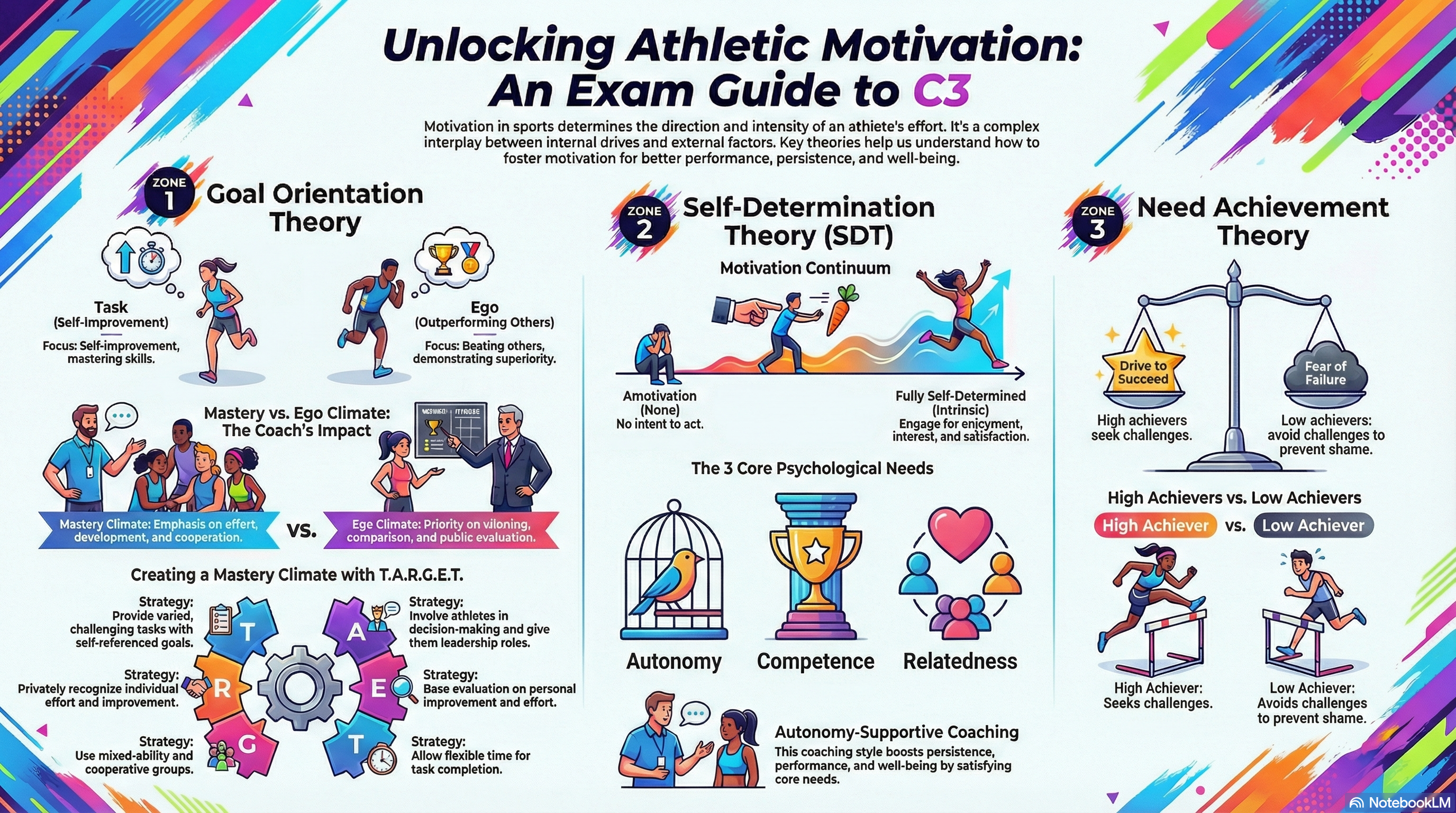
Mastering key terminology is fundamental to demonstrating a precise and sophisticated understanding in your IB SEHS examinations. These terms are not merely vocabulary to be memorized; they are the building blocks of the core theories in sports psychology. Using them accurately in your responses shows an examiner that you have a firm grasp of the foundational concepts of motivation.
With this foundational vocabulary established, it is important to understand the structure of the exams where you will apply this knowledge.
This structure provides the framework for the exam, but the command terms dictate the specific way in which you must formulate your answers within that framework.
Think of the IB command terms as the "rules of the game" for your exams. Each term signals a specific depth and type of response required, and failing to adhere to them is a common reason for losing marks. Mastering these terms is essential for demonstrating the full extent of your knowledge and maximizing your score.
| Command Term | IB Definition | Topic C.3 Model Answer |
|---|---|---|
| State | Give a specific name, value or other brief answer without explanation or calculation. | Question: State the two primary components of
motivation. Answer: The two primary components of motivation are direction and intensity. |
| Outline | Give a brief account or summary. | Question: Outline need achievement
theory. Answer: Need achievement theory posits that motivation is a dynamic balance between an individual's personality factors (the motive to achieve success vs. the motive to avoid failure) and situational factors (the probability of success and the incentive value of success). The interaction of these factors determines whether an individual will approach or avoid achievement situations. |
| Describe | Give a detailed account. | Question: Describe the TARGET behaviours that can
be used to
influence the
motivational climate. Answer: The TARGET approach identifies six areas a coach can modify to create a mastery-oriented climate: Task (designing varied and challenging activities), Authority (allowing students to be involved in decision-making), Recognition (recognizing individual effort and improvement), Grouping (using mixed-ability groups), Evaluation (basing evaluation on personal improvement and effort), and Time (providing flexible time for task completion). |
| Explain | Give a detailed account including reasons or causes. | Question: Explain why high ego orientation can be
problematic
if task
orientation is low. Answer: A high ego orientation without a corresponding high task orientation can be problematic because the individual's self-worth is tied almost exclusively to winning or being better than others. When faced with failure or difficult competition, they may lack the task-focused resilience to persist through effort and learning, leading them to become anxious, drop out, or engage in maladaptive behaviours like cheating because their primary measure of competence is threatened. |
| Analyse | Break down in order to bring out the essential elements or structure. | Question: Using the data in Table 2 p.503,
analyse the motivational climate of physical education lessons
across the three
age
groups. Answer: An analysis of the data shows that the task motivational climate is consistently rated higher than the ego motivational climate across all three age groups, both at the beginning and end of the year. For example, for 12-year-olds at the beginning of the year, the task climate score is 4.0 (±0.8) while the ego climate score is 2.7 (±0.9). This suggests that students perceive their PE lessons as being more focused on mastery and effort (task climate) than on comparison and competition (ego climate). Furthermore, the scores remain relatively stable across the age groups and throughout the year, indicating a consistent climate perception. |
| Evaluate | Make an appraisal by weighing up the strengths and limitations. | Question: Evaluate goal orientation
theory. Answer: Goal orientation theory provides a robust framework for understanding motivation in achievement contexts. Strengths: (1) It effectively considers both individual disposition (an athlete's tendency toward task or ego orientation) and situational factors (the motivational climate), providing a more holistic view than personality-only theories. (2) It has strong practical applications, such as the TARGET framework, which gives coaches and teachers concrete strategies to foster a more positive and adaptive motivational climate. Limitations: (1) The theory has been criticized for potential Western and male bias, as it was developed primarily in those contexts and may not fully capture motivational dynamics in other cultures. (2) The focus on just two goal orientations (task and ego) could be seen as reductionist, as individuals may hold multiple goals simultaneously that influence their behaviour in complex ways. |
| Calculate | Obtain a numerical answer showing the relevant stages in the working. | Question: Using the data in Table 3 p.523,
calculate the mean ego orientation score for all three
students. Answer: Formula: Mean = (Sum of values) / (Number of values). Working: Mean ego = (4.0 + 4.28 + 2.69) / 3 = 10.97 / 3 = 3.6566... Final Answer: The mean ego orientation score is 3.66 (to two decimal places). The score is a rating and has no units. |
Now that you understand how to answer questions, let's review the core content that will form the basis for your answers.
Topic C.3 is divided into three core areas that build upon one another: Achievement Motivation, Self-Determination Theory, and Motivational Climate. This section will break down the essential knowledge for each, providing the theoretical foundations and practical applications you will need to master for the exam.
C.3.1 Achievement Motivation
Achievement motivation refers to an individual's efforts to master a task, achieve excellence, overcome obstacles, and take pride in demonstrating talent. It's the 'why' behind an athlete's approach to competition and challenge. This sub-topic covers foundational theories that explain why individuals are drawn to or shy away from challenging situations, focusing on the interplay between personality and the environment.
Key Concepts
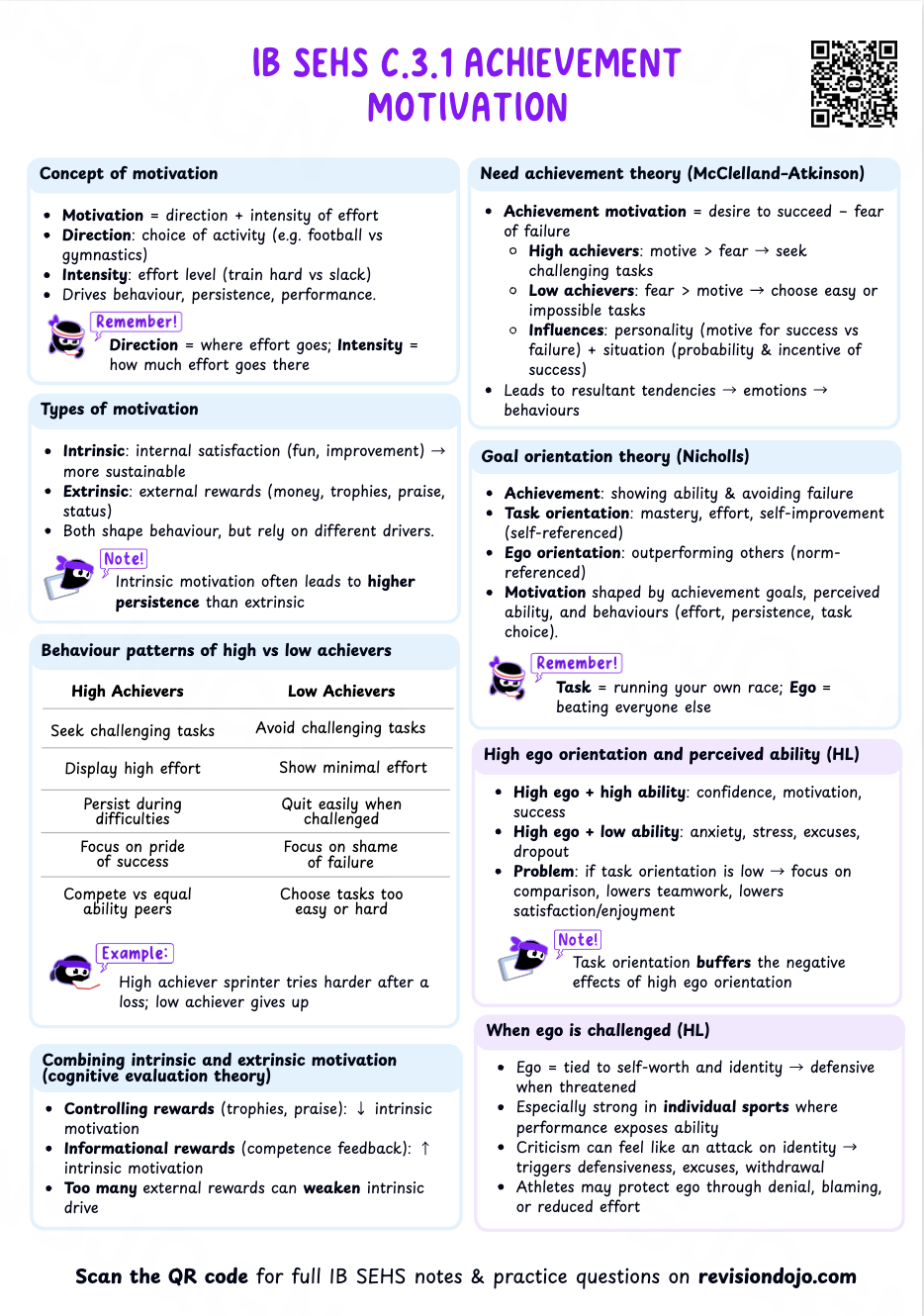
- Motivation: Defined by its direction (what an individual seeks out, e.g., trying out for the soccer team) and intensity (how much effort they exert in that pursuit).
- Intrinsic and Extrinsic Motivation: The crucial distinction between motivation that comes from internal satisfaction and enjoyment versus motivation that stems from external rewards like trophies, money, or praise.
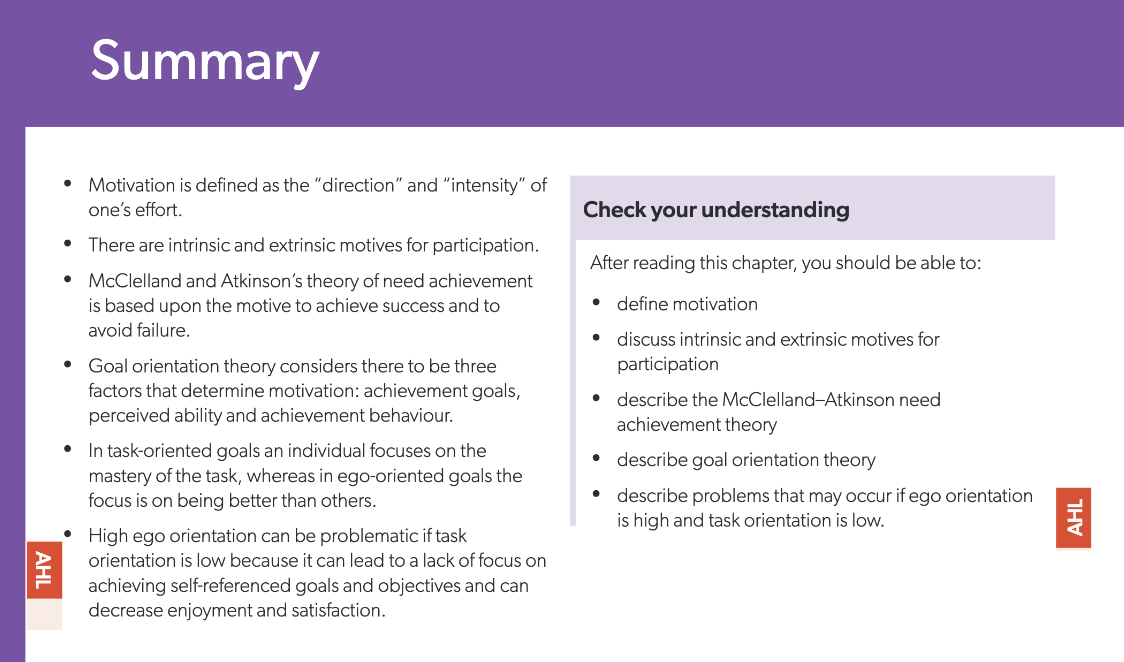
- Need Achievement Theory: Proposes that motivation is a dynamic product of both stable personality factors (an individual's inherent motive to succeed versus their motive to avoid failure) and fluctuating situational factors (the probability of success in a task and the incentive value of that success).
- Goal Orientation Theory: Suggests that motivation in achievement settings is driven by an individual's goal perspective, which can be either task-involved (focused on mastery, learning, and self-improvement) or ego-involved (focused on outperforming others and demonstrating superior ability).
Mechanism: How Need Achievement Predicts Behaviour
- An individual's personality contains a motive to achieve success (Nach) and a motive to avoid failure (Naf).
- They assess the situation based on the probability of success and the incentive value of success.
- Individuals high in Nach (high achievers) actively seek out challenges with a 50-50 chance of success because this is where the pride in success is maximized. Their primary emotional focus is on achieving pride.
- Individuals high in Naf (low achievers) actively avoid such challenges. They prefer either very easy tasks (where success is guaranteed) or very difficult tasks (where no one expects success), thereby minimizing the potential for feeling shame. Their primary emotional focus is on avoiding shame.
A high-achieving tennis player (high Nach) chooses to enter a tournament where they are ranked in the middle of the pack, presenting a genuine 50-50 challenge. A low-achieving player (high Naf) either plays a much lower-ranked opponent they are sure to beat or enters a professional tournament where they are expected to lose immediately, thus avoiding the 50-50 challenge where their ability is truly tested and the risk of shame is highest.
A common mistake is to see Need Achievement and Goal Orientation as the same. Think of it this way: Need Achievement Theory focuses on the emotional drivers (pride vs. shame) that push athletes toward or away from a challenge. Goal Orientation Theory focuses on the cognitive definition of success (mastery vs. outperforming others) that guides their behaviour within that challenge. Top-tier answers often explain how an athlete's goal orientation influences their perception of what constitutes a "50-50 challenge."
High ego orientation can become problematic when an athlete lacks a strong task orientation. Their sense of self-worth becomes entirely dependent on winning, which can lead to a lack of effort, decreased enjoyment, and dropout when they are not successful or face superior competition.
C.3.2 Self-Determination Theory (SDT)
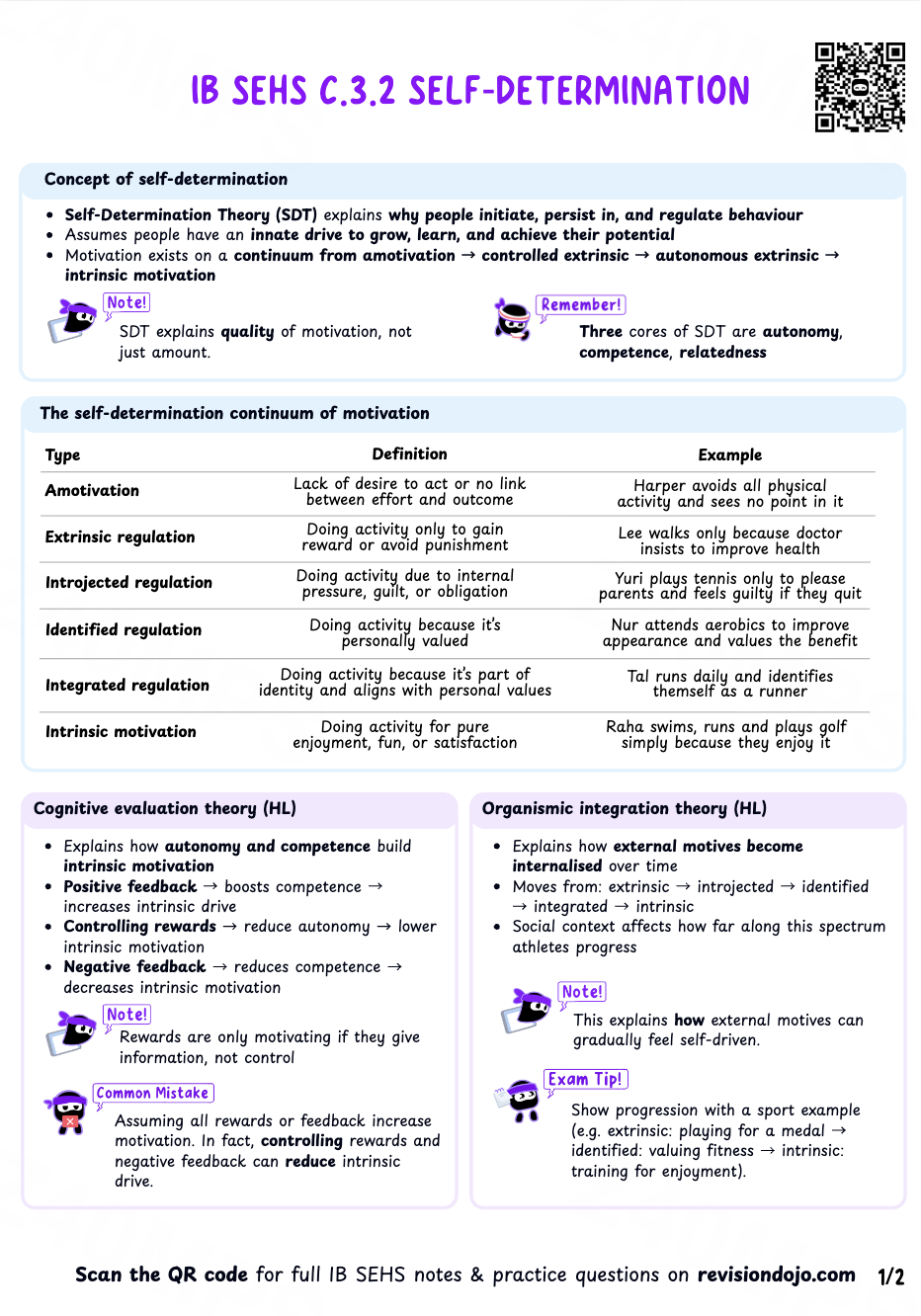
Self-Determination Theory (SDT) is a broad meta-theory that provides a modern, nuanced view of motivation. It proposes that motivation is not a simple on/off switch but exists along a continuum, ranging from completely non-self-determined (controlled) to fully self-determined (autonomous).
Key Concepts
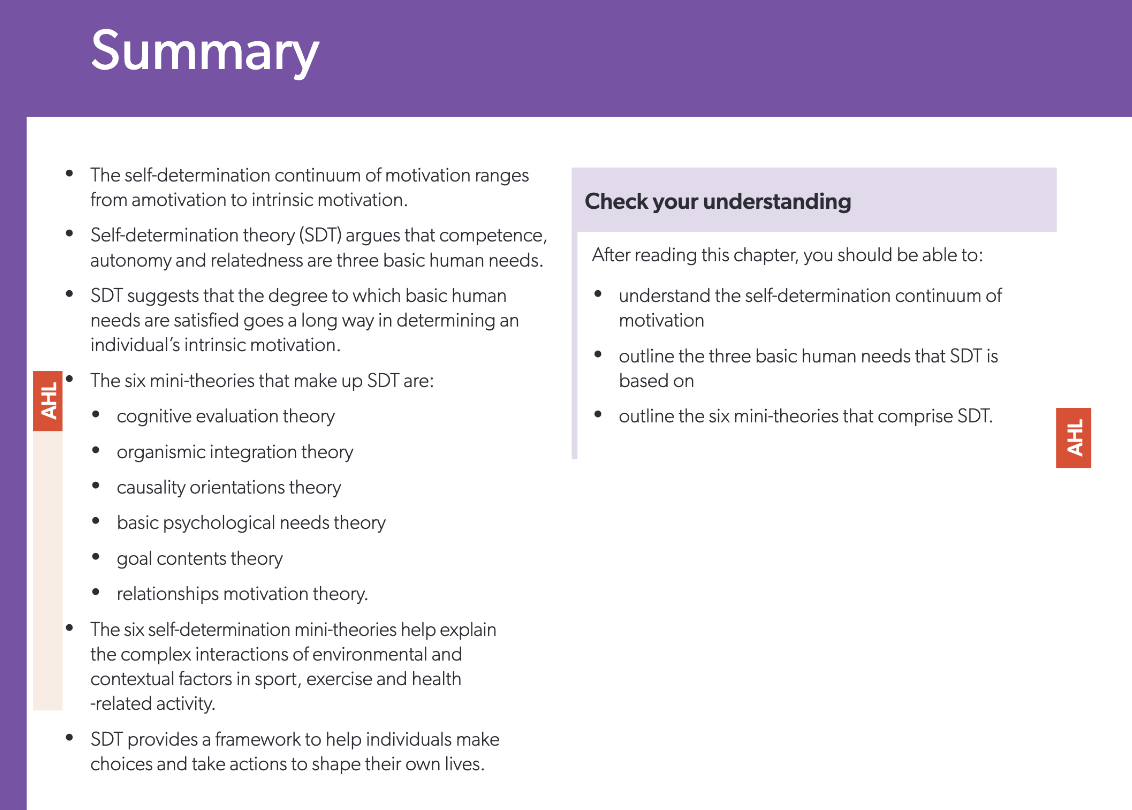
- The Self-Determination Continuum: Motivation is a spectrum that ranges from a complete lack of intent to the highest level of self-regulation: Amotivation -> Extrinsic Regulation -> Introjected Regulation -> Identified Regulation -> Integrated Regulation -> Intrinsic Motivation.
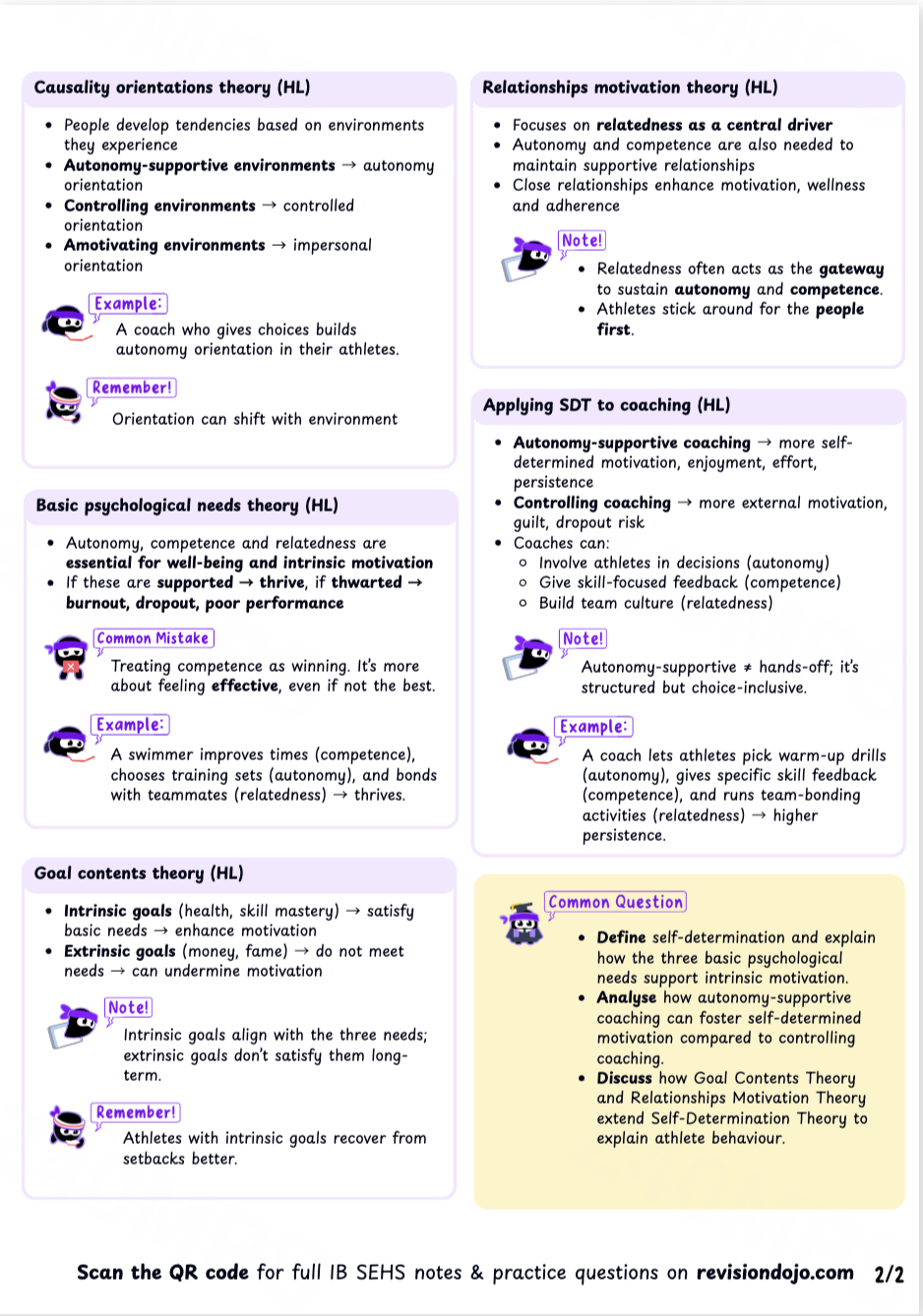
- Three Basic Psychological Needs: SDT argues that optimal motivation, performance, and psychological well-being are achieved when three innate psychological needs are met: Autonomy (the need to feel in control of one's own actions and decisions), Competence (the need to feel effective and capable), and Relatedness (the need to feel connected to others and have a sense of belonging).
- Six Mini-Theories: SDT is a comprehensive framework composed of six smaller theories that each explain a different facet of motivation. These include Cognitive Evaluation Theory (which explains how events like rewards affect intrinsic motivation) and Organismic Integration Theory (which describes the different types of extrinsic motivation on the continuum).
Mechanism: Fostering Autonomous Motivation
- A coach or teacher creates an autonomy-supportive environment by offering meaningful choices, providing a rationale for tasks, and acknowledging the athlete's perspective.
- This support for autonomy, combined with tasks that are optimally challenging (supporting competence) and a positive, respectful group atmosphere (supporting relatedness), works to satisfy the three basic psychological needs.
- When these needs are satisfied, athletes are more likely to internalize their motivation, moving along the continuum from controlled forms of regulation towards more autonomous forms and, ultimately, intrinsic motivation.
- This shift towards autonomous motivation leads to a host of positive outcomes, including greater persistence, higher enjoyment, enhanced well-being, and improved performance.
A youth baseball coach wants to motivate his players for the season. Instead of dictating every aspect of practice (a controlling style), he explains the purpose of a new defensive drill and asks the players for their input on how to best run it. This supports their autonomy and relatedness. He then provides positive, constructive feedback on their execution, which supports their sense of competence, leading to greater engagement, effort, and enjoyment in the practice.
The Self-Determination Continuum is not just an abstract model; it's a diagnostic tool for coaches. An athlete moving from introjected regulation ("I practice because I'd feel guilty if I didn't") to identified regulation ("I practice because I see how it will improve my game") is a major coaching success. This shift signifies that the athlete's needs for autonomy and competence are being met, leading to more resilient, long-term motivation.
Extrinsic rewards are not always detrimental to motivation. A reward (e.g., specific verbal praise) that provides positive information about an athlete's competence can actually increase intrinsic motivation. However, a reward (e.g., money for winning) that is perceived as controlling the athlete's behaviour is likely to undermine and decrease intrinsic motivation.
C.3.3 Motivational Climate
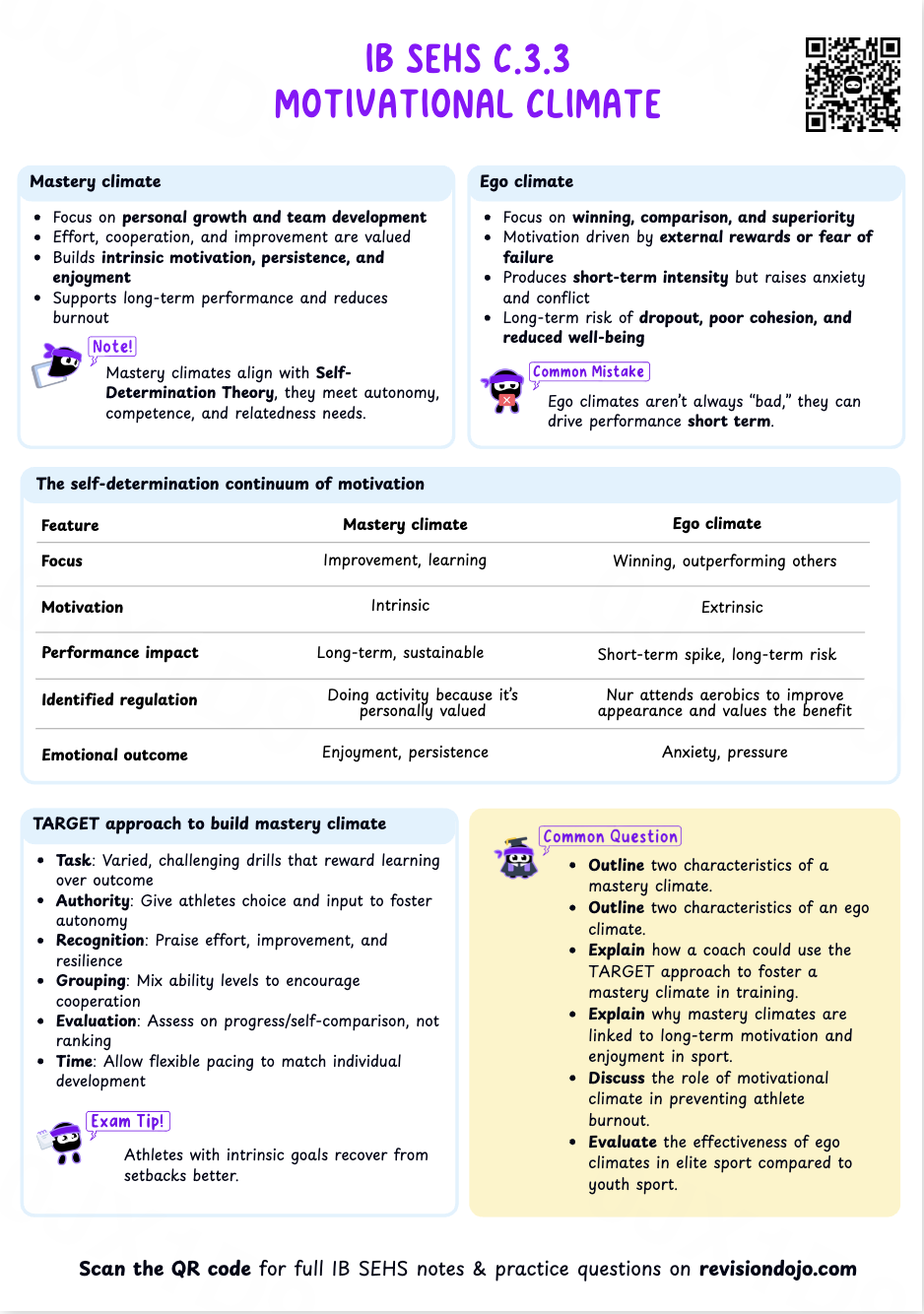
The motivational climate is the psychological environment engineered by a coach, teacher, or parent. This climate is not accidental; it is a direct result of the values that are emphasized, the way success is defined, and how feedback is delivered. This climate plays a powerful role in determining whether athletes adopt a task (mastery) or ego (performance) orientation, which in turn affects their behaviour, effort, and enjoyment.
Key Concepts
- Mastery Climate (Task-Involving): An environment where the focus is on effort, personal improvement, skill development, and cooperation. Success is self-referenced and defined by learning and working hard.
- Performance Climate (Ego-Involving): An environment where the focus is on social comparison, outperforming others, and winning with minimal effort. Success is norm-referenced and defined by being better than others.
- The TARGET Approach: A practical framework outlining six distinct areas (Task, Authority, Recognition, Grouping, Evaluation, Time) that leaders can manipulate to create a more mastery-oriented motivational climate.
Mechanism: The TARGET Approach in Action
- Task: The coach designs a variety of tasks that challenge all players at their own level and encourage learning and development.
- Authority: Players are given leadership roles and are actively involved in the decision-making process regarding training.
- Recognition: The coach provides private and individual recognition for effort, persistence, and personal improvement, not just for the best performance or winning.
- Grouping: Players are placed in mixed-ability groups to encourage peer learning, cooperation, and a focus on collective improvement.
- Evaluation: Assessment is based on personal progress, mastery of skills, and effort, rather than on comparison to teammates.
- Time: Flexible timing is provided for individuals to complete tasks, accommodating different learning rates and promoting skill development over speed.
In a physical education soccer lesson aimed at improving dribbling skills, the teacher wants to create a mastery climate. Instead of a simple relay race where winning is the only goal (ego climate), she sets up several dribbling stations with different levels of difficulty. She encourages students to choose their own starting station (Authority), praises them privately for their focused effort (Recognition), and has them work in pairs to give each other feedback (Grouping), fostering an environment where improvement is valued over winning.
A mastery/task climate is strongly associated with positive outcomes like greater enjoyment, persistence through difficulty, higher intrinsic motivation, and the belief that success is a result of effort rather than innate talent.
Now you have a solid grasp of the core theories. The next step is to apply this knowledge to exam-style questions.
Applying your knowledge to exam-style questions is the most effective way to prepare for the real thing. This section provides a range of questions from Paper 1A (Multiple Choice), Paper 1B (Data-Based), and Paper 2 (Extended Response) to test your comprehensive understanding of Topic C.3.
Why A is wrong: A high task orientation would involve goals related to personal improvement, such as improving their shot accuracy percentage, which is not stated.
Why B is wrong: This is the opposite of what is described; the player shows low task and high ego traits.
Why C is wrong: The player clearly has high motivation, but it is channeled towards ego-oriented goals, not a general lack of motivation.
Why A is wrong: High self-determination is associated with positive psychological outcomes and lower anxiety, as individuals feel in control rather than pressured.
Why B is wrong: Intrinsic motivation is defined by enjoyment and satisfaction in the activity itself; therefore, high intrinsic motivation leads to increased, not decreased, enjoyment.
Why C is wrong: Athletes with high self-determination and intrinsic motivation are more persistent and less likely to drop out because their reasons for participation are internal and resilient.
Why B, C, and D are wrong: These are all examples of controlling rewards. They are contingent on performance or outcome and can shift the reason for participation from internal enjoyment to the external reward. This shift can undermine and decrease intrinsic motivation, a phenomenon known as the over-justification effect.
I. Grouping players based on ability
II. Rewarding effort above outcome
III. Encouraging competition between teammates
Why I and II only is wrong: Rewarding effort above outcome (II) is a key strategy for promoting a mastery (task) climate, not an ego climate.
Why II and III only is wrong: As above, rewarding effort (II) is characteristic of a mastery climate.
Why I, II and III is wrong: Item II is a feature of a mastery climate and contradicts the features of an ego climate in items I and III.
The questions below provide insight into the types of challenges you will face in Paper 1B. Unlike standard knowledge checks, this component places a distinct emphasis on data analysis and experimental work.
Success in Paper 1B requires you to apply the "Nature of Science" (NOS) skills—such as evaluating methodologies, interpreting graphs, and understanding study design—rather than simply recalling course content.
To access a complete archive of true past papers and exemplar materials for Paper 1B, please use the resource link below.
A study investigated changes in achievement orientation and enjoyment of physical education in students (n = 194) from the ages of 12 to 14 years. The mean (±SD) scores for task motivational climate, ego motivational climate, task orientation, ego orientation and enjoyment at the beginning and at the end of each year are shown in Table 2. Higher scores = more/higher, and lower scores = less/lower.
| 12 years (Start) | 12 years (End) | 13 years (Start) | 13 years (End) | 14 years (Start) | 14 years (End) | |
|---|---|---|---|---|---|---|
| task motivational climate | 4.0 (±0.8) | 3.8 (±0.9) | 3.6 (±0.9) | 3.5 (±1.0) | 3.5 (±0.9) | 3.5 (±0.9) |
| ego motivational climate | 2.7 (±0.9) | 2.4 (±0.9) | 2.6 (±0.8) | 2.5 (±0.9) | 2.7 (±0.9) | 2.7 (±0.9) |
| task orientation | 4.3 (±0.6) | 4.2 (±0.7) | 4.0 (±0.7) | 4.0 (±0.8) | 4.1 (±0.7) | 4.0 (±0.8) |
| ego orientation | 3.1 (±0.9) | 3.0 (±1.0) | 2.9 (±1.0) | 2.8 (±1.0) | 2.8 (±1.0) | 2.8 (±1.0) |
| enjoyment | 5.4 (±1.3) | 5.3 (±1.3) | 5.1 (±1.4) | 5.0 (±1.4) | 4.9 (±1.4) | 4.9 (±1.4) |
Identify which age group enjoyed their physical education most at the end of the year. [1 mark]
Calculate the largest difference between task orientation and ego orientation at the beginning of the year. [2 marks]
Discuss the relation between motivational climate and enjoyment of physical education lessons. [4 marks]
Motivational characteristics are influential in shaping adolescents' desire to persist in sport. Soccer players (n = 492) between the ages of 13 and 17 were surveyed to find out their scores for amotivation, relatedness, autonomy and competence. Their mean (±SD) scores are shown in Table 3, where higher scores = more and lower scores = less. Players were grouped into 'Persistent players' (want to keep playing) and 'Dropout players' (thinking of stopping).
| Persistent players | Dropout players | |
|---|---|---|
| amotivation | 1.98 (±1.01) | 3.02 (±1.52) |
| relatedness | 7.11 (±1.29) | 6.58 (±1.23) |
| autonomy | 6.98 (±1.36) | 6.58 (±1.32) |
| competence | 7.16 (±1.29) | 7.13 (±1.51) |
Identify which group had the least motivation. [1 mark]
Compare and contrast the relatedness and competence scores for both groups. [2 marks]
Using self-determination theory, explain why one group of players wants to keep playing soccer and the other group is thinking of stopping. [4 marks]
Having applied your knowledge, let's briefly review the mathematical skills required for this topic.
While SEHS is not a math-heavy subject, basic data interpretation and analysis skills are required. For Topic C.3, this most commonly involves calculating means and differences from data presented in tables, a key skill for Paper 1B data-based questions.
Skill: Calculating the Mean
Worked Example (Topic C.3)
Context: Using the data from the DBQ in Table 3 on page p.523 of the textbook, calculate the mean task orientation score for the three volleyball players.
Data: Student 1 Task Score = 4.53; Student 2 Task Score = 2.97; Student 3 Task Score = 4.13.
Calculation Steps:
- Sum the values: 4.53 + 2.97 + 4.13 = 11.63
- Count the number of values: There are 3 students.
- Divide the sum by the count: 11.63 ÷ 3 = 3.8766...
- State the final answer to two decimal places: The mean task orientation score is 3.88.
Conclusion
Units: These scores are based on a rating scale and have no units.
Finally, let's identify and clarify some common conceptual errors students make in this topic.
Awareness of common mistakes is a powerful tool for avoiding them. This section highlights frequent conceptual misunderstandings related to motivation theories. Reviewing these points will help refine your knowledge and prevent you from falling into common traps in the exam.
To excel in SEHS, it is vital to make connections between different parts of the syllabus.
The IB SEHS course encourages a holistic understanding of sports science, rewarding students who can synthesize knowledge across different topics. This section provides questions and thinking points to help you connect the concepts of Motivation (C.3) with other areas of the syllabus, a skill highly valued in Paper 2 extended responses.
- Focus of Control: A task-oriented athlete focuses on controllable factors like personal effort and skill execution, which can lower stress by increasing their sense of control. An ego-oriented athlete focuses on the less controllable outcome of winning, which can elevate competitive state anxiety.
- Perception of Threat: An ego-oriented athlete is more likely to perceive a competition as a threat to their self-worth, leading to higher cognitive anxiety (worry) and fear of failure. A task-oriented athlete is more likely to view the same situation as a challenge and an opportunity to improve, which is a more positive appraisal.
- Coping Strategies: When faced with setbacks, a task-oriented athlete might use problem-focused coping (e.g., putting in more practice on a weak skill). An ego-oriented athlete, seeking to protect their ego, might be more prone to emotion-focused coping (e.g., blaming others, making excuses).
- Learning Environment: A mastery climate, which encourages trial and error without fear of social judgment or punishment for mistakes, creates a psychologically safe environment that is ideal for the cognitive and associative stages of learning. A highly critical performance (ego) climate can create anxiety that inhibits an athlete's willingness to try new skills.
- Feedback: In a mastery climate, feedback is informational and focused on the process of improvement (knowledge of performance), which is essential for error correction and skill development. In a performance climate, feedback may be purely outcome-based (knowledge of results, i.e., winning or losing), providing less useful information for correcting technical errors.
- Persistence: Skill acquisition is rarely linear and requires persistence through performance plateaus. A mastery climate fosters this persistence by defining success as effort and improvement, motivating athletes to continue practicing even when progress is slow.
Finally, use the following checklist to assess your own mastery of the topic.
Use this checklist to perform active recall and assess your readiness for the exam. Rather than passively re-reading notes, try to answer these questions from memory. Being able to confidently say "yes" to each one indicates a solid grasp of Topic C.3.
- Can I define motivation using the core concepts of direction and intensity?
- Can I distinguish between intrinsic motivation and the four types of extrinsic motivation on the self-determination continuum?
- Can I outline the key components of Need Achievement Theory, including personality and situational factors?
- Can I describe the behavioural and cognitive characteristics of task-involved versus ego-involved individuals?
- Can I explain the role of the three basic psychological needs (autonomy, competence, relatedness) as the foundation of Self-Determination Theory?
- Can I apply the TARGET framework to provide specific examples of how a coach can create a mastery motivational climate?
- Can I explain why a high ego orientation can be problematic, especially when an individual's task orientation is low?
- Can I analyze data to draw conclusions about an individual's motivational orientation or the perceived motivational climate?

🎉 Topic C3 - Motivation Mastered!
You now have the foundational knowledge, practical application skills, and exam strategies to excel in Topic C.3. Keep practicing with exam-style questions and refine your understanding through active recall and spaced repetition. Good luck with your preparation!